
The Complete Kitchen Remodeling Guide: Layout, Cabinets, Countertops, and Budget Planning
June 29, 2026When you’re ready to commence your Kitchen Remodeling Ideas, understanding the key components like layout, cabinets, countertops, and your budget is essential. A smart kitchen layout design flows seamlessly, optimizing your space and making it functional for daily use. Think of the work triangle keeping your stove, sink, and refrigerator close for efficiency. Next, custom kitchen cabinets can maximize storage while reflecting your style; choose designs that complement your theme. Countertops are vital too, consider materials that are both durable and aesthetically pleasing. Finally, never overlook your kitchen remodel budget. Set a clear financial plan to cover all expenses, including materials and labor, while leaving room for unexpected costs. A structured approach leads to a beautifully remodeled kitchen you’ll adore.
Why Proper Kitchen Remodeling Planning Leads to Better Results
Although diving into a kitchen remodel can feel overwhelming, careful planning is the secret ingredient that guarantees a successful transformation. By focusing on the kitchen work triangle, you can optimize your space for efficiency, ensuring that your cooking, prep, and cleaning areas flow seamlessly together. Weighty decisions like storage options and countertop materials become clearer with a solid plan in hand. Plus, budget planning is essential; when you establish financial boundaries early, you can avoid costly surprises down the line. This foresight enables you to prioritize what truly matters, be it aesthetics, functionality, or energy efficiency. Ultimately, meticulous planning leads to a kitchen that enhances your lifestyle while boosting your home’s value bringing a delightful result you’ll cherish for years.
Defining Your Kitchen Remodeling Goals and Project Priorities
Consider seeking remodeling contractor advice to align your wishes with reality, especially regarding cost and feasibility. Effective budget planning will help you prioritize investments that yield the best returns and avoid overspending. Remember, each decision from cabinetry to countertops should reflect your lifestyle and enhance functionality. Stay focused on your ultimate vision to guarantee your kitchen renovation becomes not just beautiful, but an efficient space for everyday living.
Choosing the Best Kitchen Layout for Functionality and Workflow
Having identified your kitchen remodeling goals, it’s time to focus on how your space can best accommodate your culinary needs. Choosing the right kitchen layout is essential for maximizing functionality and workflow. Whether you opt for a U-shaped, L-shaped, or galley design, make sure it allows easy access to your kitchen cabinets and appliances. Think about how you’ll move between cooking, prepping, and cleaning an open design can enhance flow. Pair your layout with beautiful quartz countertops, providing ample workspace that’s both durable and stylish. Remember, every element should support your cooking habits and lifestyle, ensuring you enjoy every moment spent in your newly remodeled kitchen. A well-planned layout transforms your space into a culinary haven.
Understanding the Kitchen Work Triangle and Traffic Flow Principles
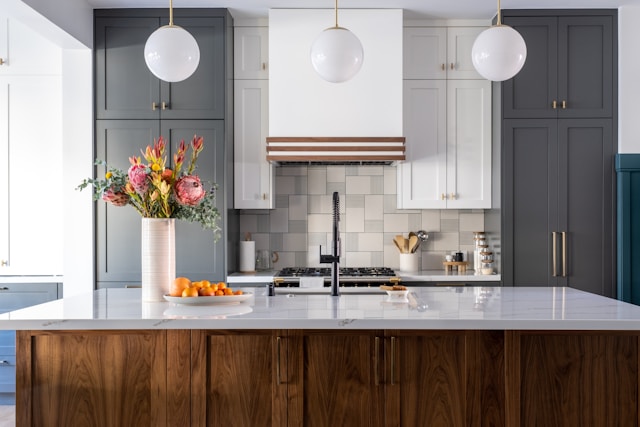
The kitchen work triangle is a foundational concept that can greatly influence your cooking experience. This triangle connects your stove, sink, and refrigerator—key areas for efficient meal prep. To enhance usability, consider placing a kitchen island within this triangle, providing additional workspace and storage. Pay attention to traffic flow; ensuring clear pathways prevents congestion while you cook. Incorporating thoughtful kitchen lighting design not only illuminates these areas but also showcases your beautiful island and flooring. When choosing kitchen flooring options, opt for materials that blend style with durability, ensuring they can withstand busy foot traffic and spills. A well-planned kitchen layout, anchored by these principles, will elevate your cooking and dining experience seamlessly.
Planning Storage Solutions with Cabinets, Pantry Space, and Organization Zones
When you think about your kitchen’s efficiency, maximizing storage is key to creating a functional space. Start by evaluating your cabinet options—choose designs that go all the way to the ceiling to take advantage of vertical space. Then, consider incorporating a pantry that fits seamlessly into your layout; it’s perfect for keeping dry goods organized and accessible. Organize zones based on usage, like a baking zone with pull-out racks and a dedicated cooking area with essential pots and pans within reach. Don’t forget about the often-overlooked corner cabinets; lazy Susans or pull-out trays can maximize that space. Thoughtfully planning your storage solutions not only declutters your kitchen but creates a serene environment for cooking and entertaining.
Comparing Stock, Semi-Custom, and Custom Cabinets for Your Budget
Choosing the right cabinets can often feel overwhelming, but understanding the differences between stock, semi-custom, and custom options can help you make a smart decision for your budget. Stock cabinets are pre-manufactured and budget-friendly, offering a variety of styles but limited customization. If you’re looking for a balance, semi-custom cabinets allow for more personalized features, including size adjustments and finishes, without breaking the bank. Custom cabinets provide the ultimate in design flexibility and quality, tailored exactly to your specifications, but they come with a higher price tag. Weigh your priorities: if budget constraints are tight, stock or semi-custom might be your best bet, while custom options truly shine in unique homes or elaborate designs. Choose wisely!
Selecting the Right Countertop Material for Durability and Style
After settling on cabinets that suit your style and budget, it’s time to contemplate countertops—an integral element that greatly affects both the beauty and functionality of your kitchen. You’ll want to reflect on materials like quartz for its sleek durability, granite for timeless elegance, or butcher block for a warm, inviting touch. Each option has its pros and cons. Quartz is nearly maintenance-free, while granite adds a unique natural aesthetic with proper sealing. If you’re after something rustic, butcher block can be restored to its former glory with sanding. Consider how you’ll use your countertop—cooking, entertaining, or homework? Your lifestyle plays a significant role in guiding your choice, ensuring your countertops reflect both durability and style.
Choosing Appliances That Fit Your Layout and Lifestyle Needs
Though selecting the right appliances might seem overwhelming at first, it’s crucial to align your choices with both your kitchen layout and lifestyle needs. Consider how you cook—do you enjoy elaborate meals or prefer quick weeknight dinners? Compact options like under-counter microwaves fit snugly into small spaces, while larger ranges cater to culinary enthusiasts. Energy-efficient appliances not only lower bills but also align with an eco-friendly approach. Pay attention to your layout: a side-by-side fridge may fit perfectly in a galley kitchen, while a built-in unit can enhance the sleekness of an open concept. Ultimately, your appliances should harmonize with your daily routines, ensuring both functionality and style in your revamped culinary haven.
Designing Effective Kitchen Lighting with Layered Lighting Strategies
When you think about your kitchen, effective lighting isn’t just an afterthought—it’s an essential component that can transform your space into a functional and inviting hub. Start with ambient lighting, like recessed fixtures, to provide overall brightness. Layer in task lighting, such as under-cabinet lights, to illuminate work areas where you chop, mix, and prep. Don’t forget accent lighting; pendant lights over an island can add personality while creating visual interest. Consider dimmer switches for flexibility, allowing you to adjust brightness for different activities or moods. With a well-planned lighting strategy, you’ll enhance the kitchen’s practicality and style, making it a warm and welcoming place for family and friends. Remember, it’s all about balance and purpose in your lighting choices.
Selecting Flooring Materials That Balance Appearance and Performance
As you begin your kitchen remodeling journey, selecting the right flooring material is essential in ensuring both beauty and functionality. You’ll want a floor that can withstand spills, high foot traffic, and the occasional dropped utensil, all while enhancing your kitchen’s aesthetic. Popular options include porcelain tile for its water resistance and durability, luxury vinyl planks for a wood-like look that’s soft underfoot, and natural stone for a timeless elegance. Don’t forget about slip resistance, particularly if your kitchen tends to get messy. Think about the color and texture, too; lighter hues can brighten your space while textured finishes add interest. A balance of design and practicality will make your kitchen truly inviting and functional for years to come.
Using Backsplashes, Hardware, and Finishes to Create a Cohesive Design
A carefully chosen backsplash, along with thoughtfully selected hardware and finishes, can truly elevate your kitchen’s design, creating a seamless and inviting aesthetic. Consider materials that harmonize with your cabinetry and countertops; for instance, a glass mosaic can add a splash of color against neutral cabinetry. Hardware, including cabinet knobs and drawer pulls, should reflect your style—choose sleek stainless steel for a modern look or vintage brass for a touch of charm. Don’t overlook finishes—matte, glossy, or textured surfaces each convey different moods. By coordinating these elements, you’ll not only enhance visual appeal but also guarantee functionality. Every detail, from the shine on the faucet to the texture of the backsplash, should work in concert, making your kitchen a true reflection of your personality.
Creating a Realistic Kitchen Remodeling Budget and Cost Breakdown
Creating a realistic kitchen remodeling budget is essential for ensuring your project progresses smoothly without unexpected financial strain. Start by identifying your overall budget, then break it down into specific categories like cabinets, countertops, appliances, and labor. Don’t forget to allocate around 10-20% for unexpected costs—this cushion can save you headaches later. Research average costs in your area to get a better idea of what to expect. Prioritize must-haves over nice-to-haves; this will help keep your budget in check. Remember, quality materials may require a higher upfront investment but can lead to long-term savings. By meticulously planning and adjusting your budget as needed, you’ll create a stunning kitchen that doesn’t just look great but also fits your financial comfort zone.
Avoiding Common Kitchen Remodeling Mistakes and Budget Overruns
While diving into a kitchen remodeling project can be exciting, it’s essential to remain vigilant about common pitfalls that can lead to budget overruns and frustration. One major mistake is underestimating costs; always account for the unexpected. Stick to your original design plan, as frequent changes can inflate expenses quickly. Additionally, avoid skimping on quality; investing in durable materials saves money in the long run. Prioritize timelines by coordinating deliveries, ensuring that materials arrive when needed, to prevent costly delays. Finally, consult professionals early on—they can provide valuable insights that may help you sidestep numerous mistakes. By staying informed and proactive, you’ll create a kitchen that’s beautifully functional without breaking the bank.
Managing Construction Timelines, Material Lead Times, and Installations
In successfully steering your kitchen remodeling journey, managing construction timelines, material lead times, and installations becomes essential to keeping your project on track and within budget. Start by creating a clear timeline, factoring in each phase from demolition to installation. It’s vital to understand that some materials, like countertops or custom cabinets, may have long lead times, so order them early. Communicate regularly with your contractors to make certain everyone’s on the same page and adjust timelines when necessary. Coordinate deliveries to avoid clutter and potential damage, and be prepared for unexpected delays. Staying organized and proactive will help you keep the momentum going, guaranteeing that your dream kitchen becomes a reality without unnecessary setbacks.
Conclusion
Success in kitchen remodeling often hinges on the harmonious blend of layout, cabinetry, countertops, and budget planning. You’ll want to start by envisioning an efficient layout that maximizes your kitchen’s potential, making cooking and entertaining effortless. Choose cabinetry that not only suits your style but also offers practical storage solutions. When selecting countertops, aim for materials that balance durability and elegance, ensuring they withstand daily use while enhancing aesthetic appeal. Most importantly, keep a close eye on your budget. It helps to prioritize expenses, assess costs early, and allow wiggle room for unforeseen challenges. By carefully integrating these elements, you’ll create a stunning kitchen that’s both functional and a sound investment for years to come.